Missouri State University-Mountain Grove

Skip navigation links
 
Missouri State Commercial fruit growers Grape and wine industry Home gardeners Students Visitors Community
Missouri State-Mountain Grove > Grape and Wine Industry > Grape Biotechnology Center > Wenping Qiu  


Dr. Wenping Qiu
Wenping Qiu, Ph. D.

Associate Research Professor
Co-Director, The Center for Grapevine Biotechnology
Department of Agriculture
Missouri State University at Mountain Grove
9740 Red Spring Road
Mountain Grove, MO 65711-2999
Telephone: (417)547-7517
Fax: (417)547-7540
E-mail: wenpingqiu@missouristate.edu

EDUCATION
Ph.D. Plant Pathology/Biotechnology (minor), North Carolina State University, 1997
M.S. Virology, Wuhan Institute of Virology, Chinese Academy of Sciences, 1988
B. S. Biology, Henan Teacher’s University, P. R. China, 1985

PROFESSION
Associate Research Professor, Department of Agriculture, Missouri State University
Adjunct Professor, Department of Fruit Sciences, China Agricultural University
Adjunct Associate Professor, Department of Plant Microbiology and Pathology, University of Missouri at Columbia

CURRENT LABORATORY MEMBERS
Dr. Raymond Fung, Postdoctoral Research Associate
John Avery, Research Associate
Karen McPherson, Research Specialist
Yan He, Graduate Student

RESEARCH INTERESTS
I Molecular interactions between grapevine and obligate biotrophic Uncinula necator
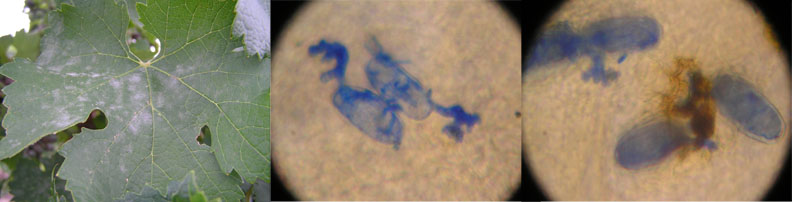
Powdery mildew caused by the fungus Uncinula necator is the most destructive fungal disease in grapevines worldwide. U. necator thrives only on living grapevine tissues by getting nutrients through an elaborate feeding structure called haustoria formed between fungus and epidermal cell. Research in my laboratory focuses on understanding molecular mechanisms underlying this intimate relationship between grapevine and U. necator. We conduct the following projects, hopefully, to reveal key steps in the complex interactions that happen after fungal conidiospores start to germinate on the surfaces of leaf, stem, and berry in a grapevine. These projects are part of the overall long-term objectives in the Center for Grapevine Biotechnology.

I.a. Histological study of grapevine and U. necator interaction

I.b. Identify powdery mildew-responsive genes in grapevines

I.c. Isolation of powdery mildew-responsive regulatory elements in grapevines

I.d. Arabidopsis thaliana as a model plant for functional analysis of grapevine genes

II Characterization of graft-transmissible diseases in grapevine
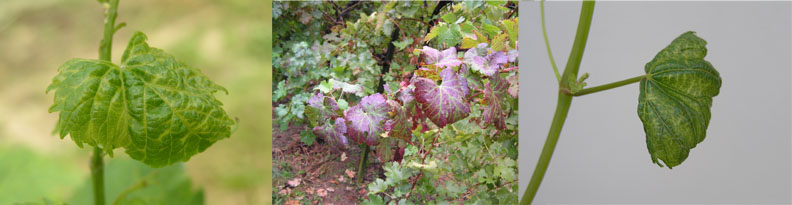
A severe disease infecting Chardonnay vines has emerged in a commercial vineyard. We have investigated the possible causal pathogens through bio-indexing, ELISA and RT-PCR. The results suggest that the agents causing the disease are graft-transmissible and appear to be virus or virus-like pathogens based on the induced symptoms on original vines and three grapevine indicator plants. We are applying dsRNA procedures, PCR, and other molecular tools to unveil the identity of graft-transmissible causal pathogens.

III Grapevine Importation and Certification Program.
A USDA permit allows us to introduce grape cultivars from other countries. Our team provides quarantine services for testing grapevines viruses in the introduced grape cultivars, investigates emerging grapevine viruses, and produces clean grapevine stocks. The Program is funded jointly by the Missouri Wine and Grape Board, and the Viticulture Consortium-East Section

Website: http://mtngrv.missouristate.edu/grapeimport.htm

SELECTED PUBLICATIONS SINCE 2000
W.P. Qiu,
H.S. Hou and L. G. Kovacs (2005). Defense-related candidate genes in Vitis species. Acta Horticulturae number 689:447-457

X. Y. Zhong, H. S. Hou and W.P. Qiu (2005) The integrity of nonviral fragments in a recombinant Tomato bushy stunt virus and defective interfering RNA is influenced by silencing and the type of inserts. Molecular Plant-Microbe Interactions 18:800-807

J. Cawly, A. B. Cole, L. Kiraly, W. P. Qiu and J. E. Schoelz (2005) Genetic suppression of cell death during the hypersensitive response to Cauliflower mosaic virus infection. Molecular Plant-Microbe Interactions 18:212-219

W.P. Qiu and K.-B. G. Scholthof (2004). Satellite panicum mosaic virus capsid protein elicits symptoms on a non-host plant and interferes with a suppressor of virus-induced gene silencing. Molecular Plant-Microbe Interactions 17:263-271

W. P. Qiu, Sándor Fekete, Tabitha Todd and K. G. Laszlo (2004). Facilitation of microshoot tip propagation of Vitis aestivalis var. Norton by combined application of an antioxidant and cytokinins. American Journal of Enology and Viticulture 55:112-114

H. S. Hou and W. P. Qiu (2003). A novel co-delivery system consisting of a Tomato bushy stunt virus and a defective interfering RNA for studying gene silencing. Journal of Virological Methods 111, 37-42.

W. P. Qiu, J.-W. Park,and H. B. Scholthof, (2002). Tombusvirus P19-suppression of virus induced gene silencing is controlled by genetic and dosage features that influence pathogenicity. Molecular Plant-Microbe Interactions 15, 269-280

W. P. Qiu and H. B. Scholthof (2001). Effects of inactivation of the coat protein and movement genes of Tomato bushy stunt virus on early accumulation of genomic and subgenomic RNAs. Journal of General Virology. 82:3107-3114

W. P. Qiu and K.-B. G. Scholthof, (2001). Defective interfering RNAs of Satellite panicum mosaic virus accumulate to high levels without affecting replication of the helper virus or satellite RNAs. Journal of Virology, 75:5429-5432

W. P. Qiu and K. –B. G. Scholthof, (2001). Genetic identification of multiple biological roles associated with the capsid protein of Satellite panicum mosaic virus. Molecular Plant-Microbe Interactions, 14:21-30

W. P. Qiu and H. B. G. Scholthof, (2001). Retention of a small replicase gene segment in Tomato bushy stunt virus defective RNAs inhibits their trans-replication by the helper virus. Virology, 281, 51-60

W. P. Qiu and K. –B. G. Scholthof, (2000). In vitro and in vivo generated defective RNAs of satellite panicum mosaic virus define cis-acting RNA elements required for replication and movement. Journal of Virology. 74:2247-2254

BOOK CHAPTER
A.N. Shi and W. P. Qiu (1998). Molecular biology and techniques of plant resistance to fungi and bacteria (in Chinese). Pages 70-100 In "Biotechnology and Sustainable Agriculture" (Eds: Z. P. Yang, S. J. Hu and X. L. Zhou). Shanghai Scientific and Technological Literature Publishing House, Shanghai, China.

PUBLICATION EDITED
Proceedings of International Grapevine Genomics Symposium (July 12-14, 2005), (Eds. W. P.Qiu and L. G. Kovacs), Missouri State University Publishing House, Springfield, Missouri, USA (ISBN 0-9748190-0-X).


Search Missouri State

Missouri State HOME
Copyright © 2000 Board of Governors, 
Missouri State University
URL:
Maintained by Marilyn Odneal
Last Modified: July 19, 2006